Case analysis
Work from a structured case file, briefing material and a growing evidence base rather than a linear classroom exercise.

i-Lab places participants inside realistic investigation scenarios where they must review evidence, analyse transactions, research open sources, conduct interviews and turn their work into a defensible final report.
Participants make real investigation decisions rather than follow a fixed slide deck.
Documents, transactions, messages and external information must be assessed and connected.
Method, judgement and reporting matter — not only identifying the right answer.
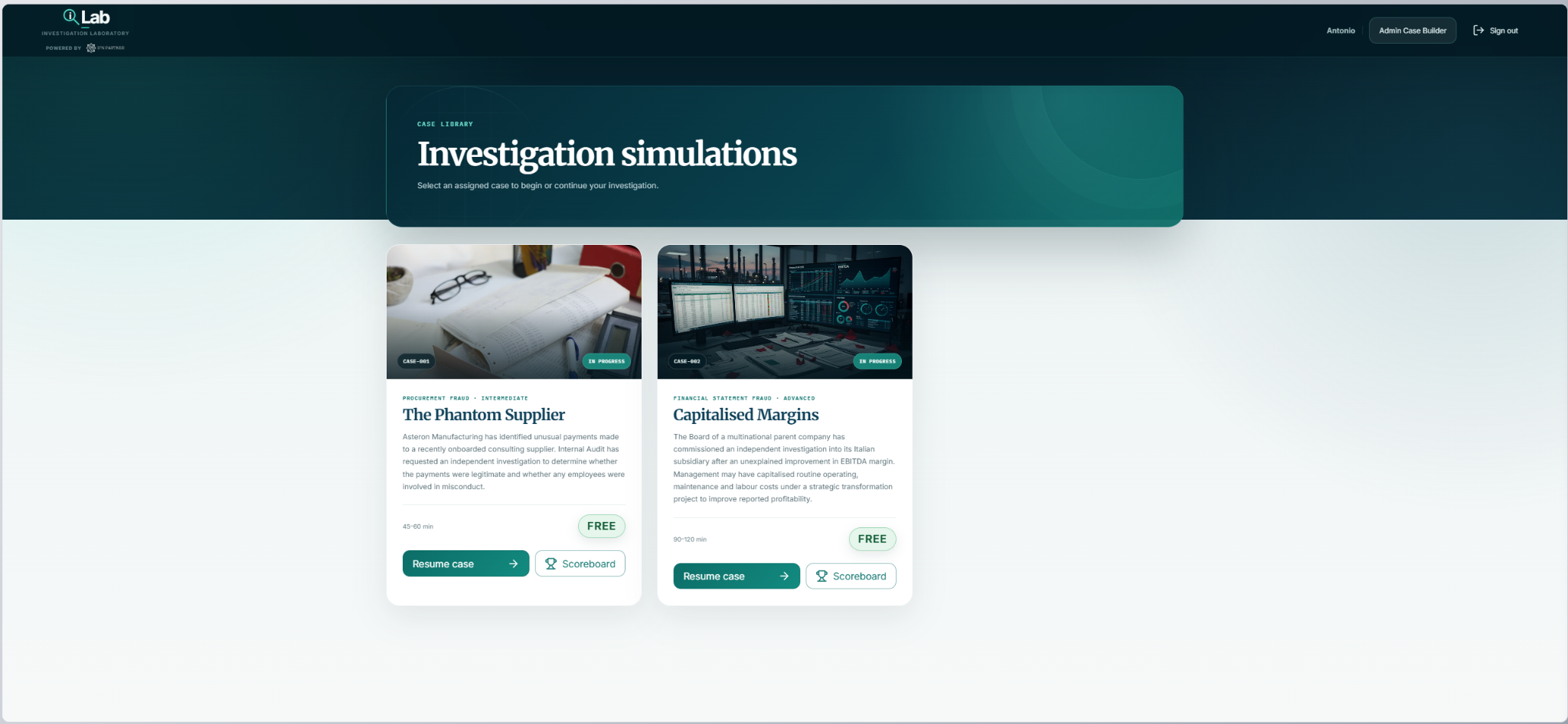
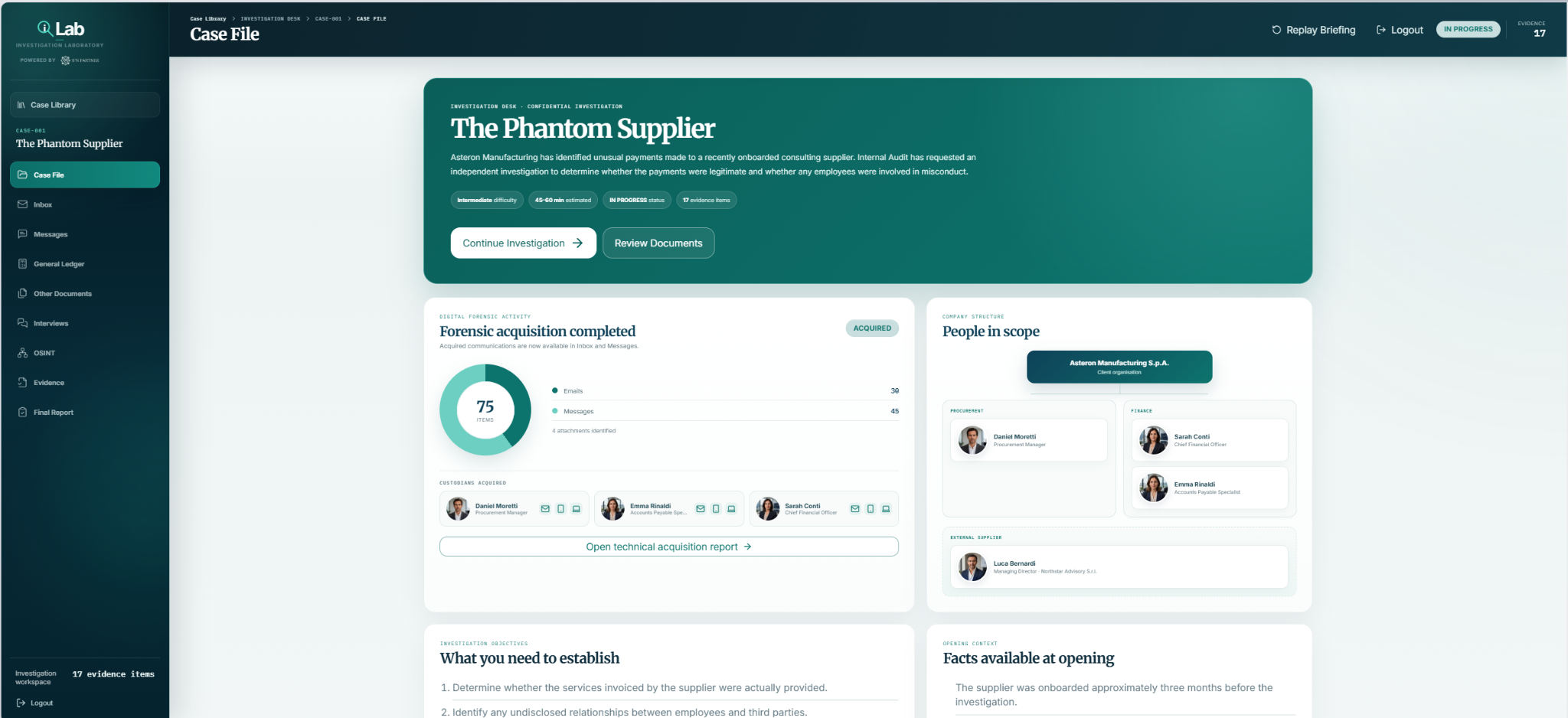
Inspired by the way investigations actually unfold, i-Lab replaces passive exercises with a digital workspace where information is incomplete, evidence must be evaluated and the participant is responsible for deciding what to do next.
Work from a structured case file, briefing material and a growing evidence base rather than a linear classroom exercise.
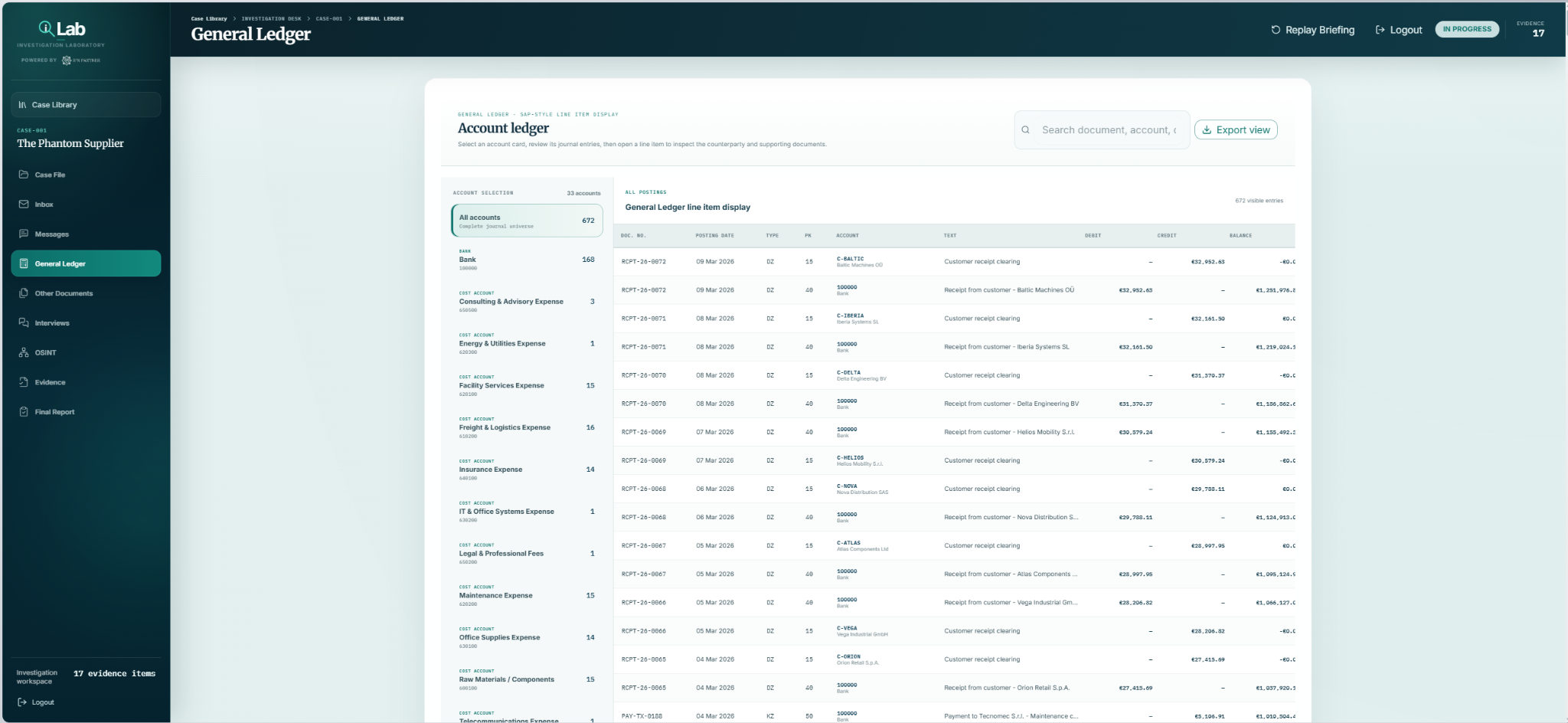
Inspect accounting data, line items and supporting documentation through an investigation-focused General Ledger environment.
Research entities, assess external information and decide what should become evidence in the investigation.
Plan and conduct text-based interviews where sequencing, wording and judgement influence the quality of the investigation.
Make proportionate acquisition decisions, select custodians and work with generated forensic acquisition reports.
Translate the investigation into defensible findings, financial exposure, recommendations and a scored final report.
The General Ledger is designed as an investigative tool rather than a static spreadsheet. Participants can review accounts, postings and supporting documents while deciding what is relevant to the case.
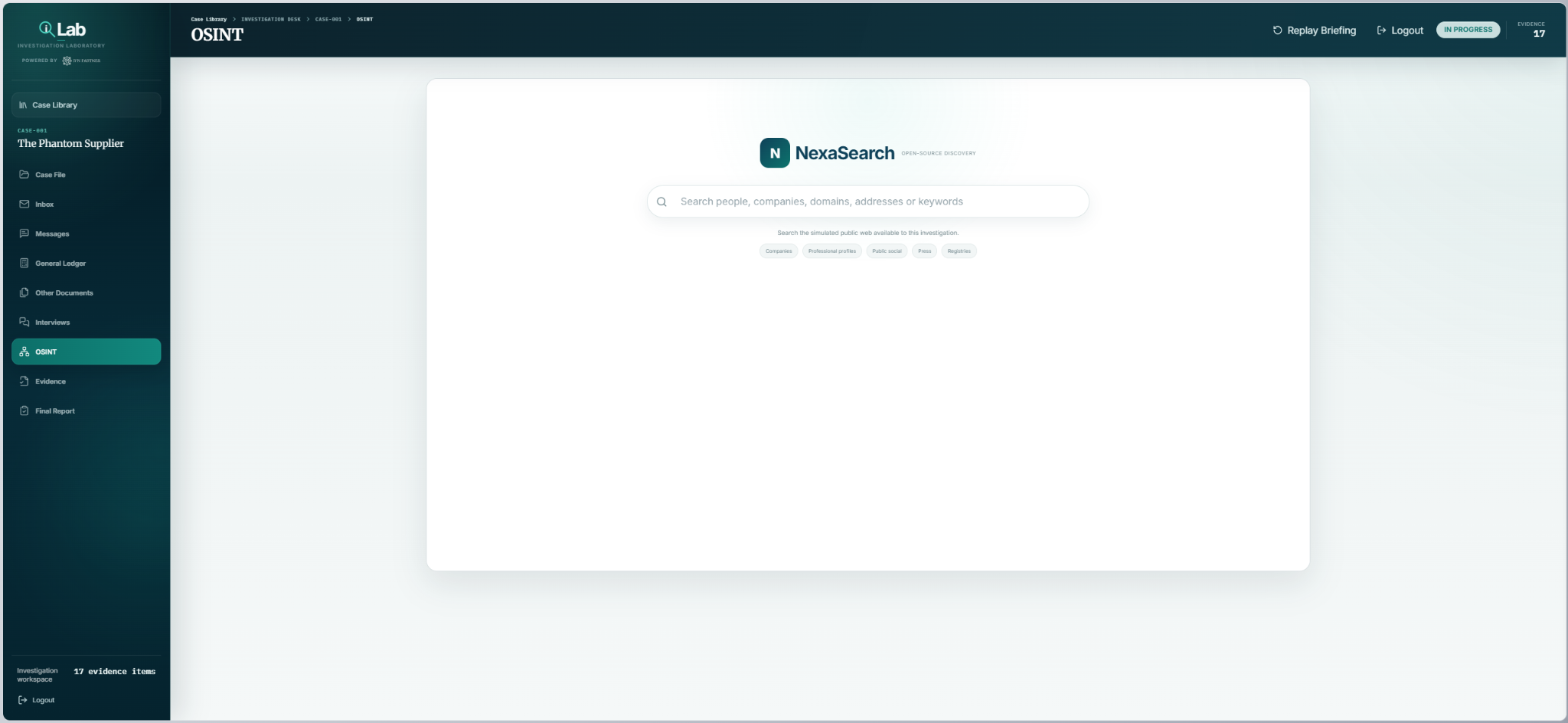
Research people, organisations and external information, then decide what is sufficiently relevant and reliable to add to the case.
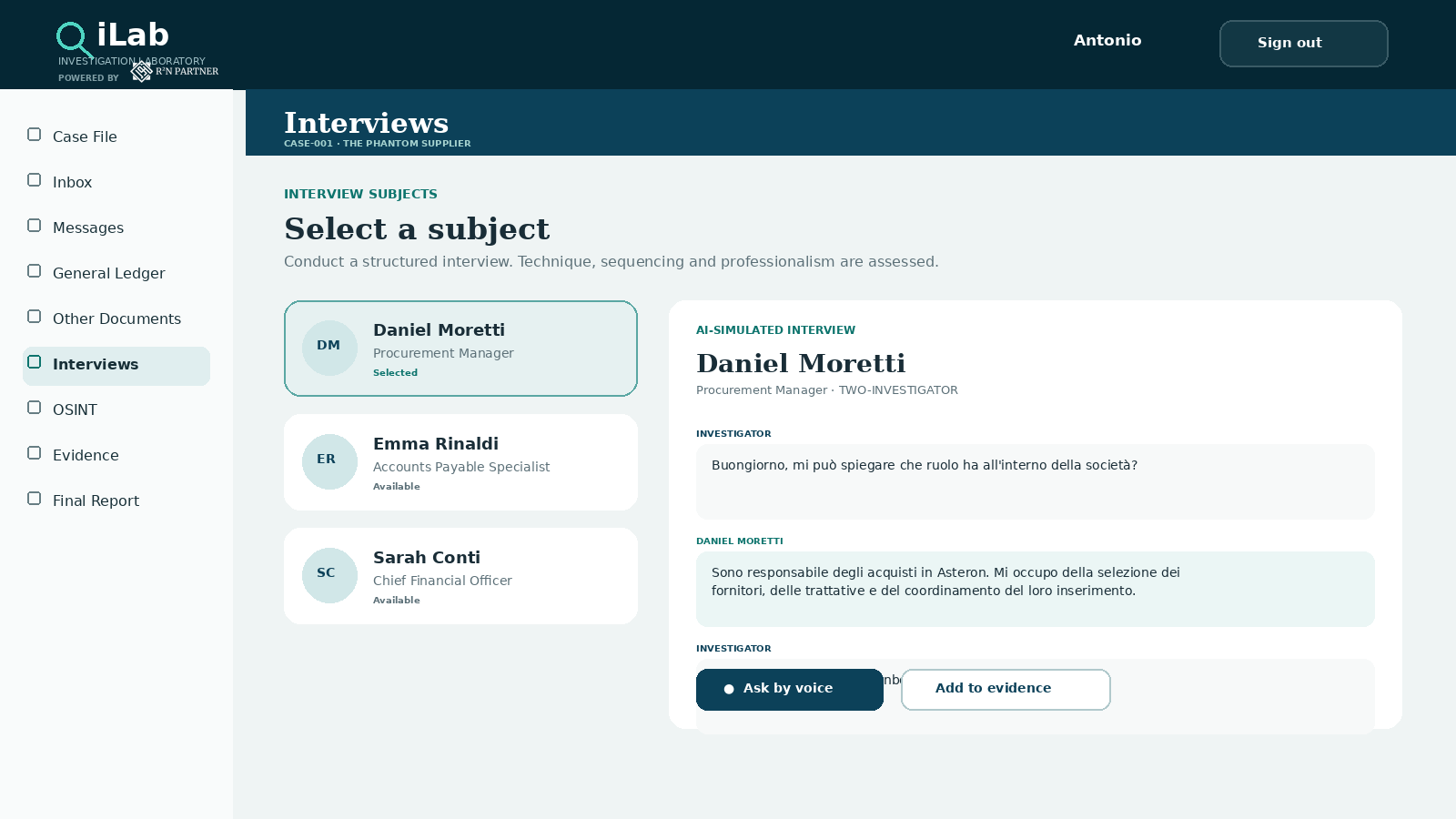
Choose how to approach witnesses and subjects. The quality, sequence and wording of questions can influence the investigation assessment.
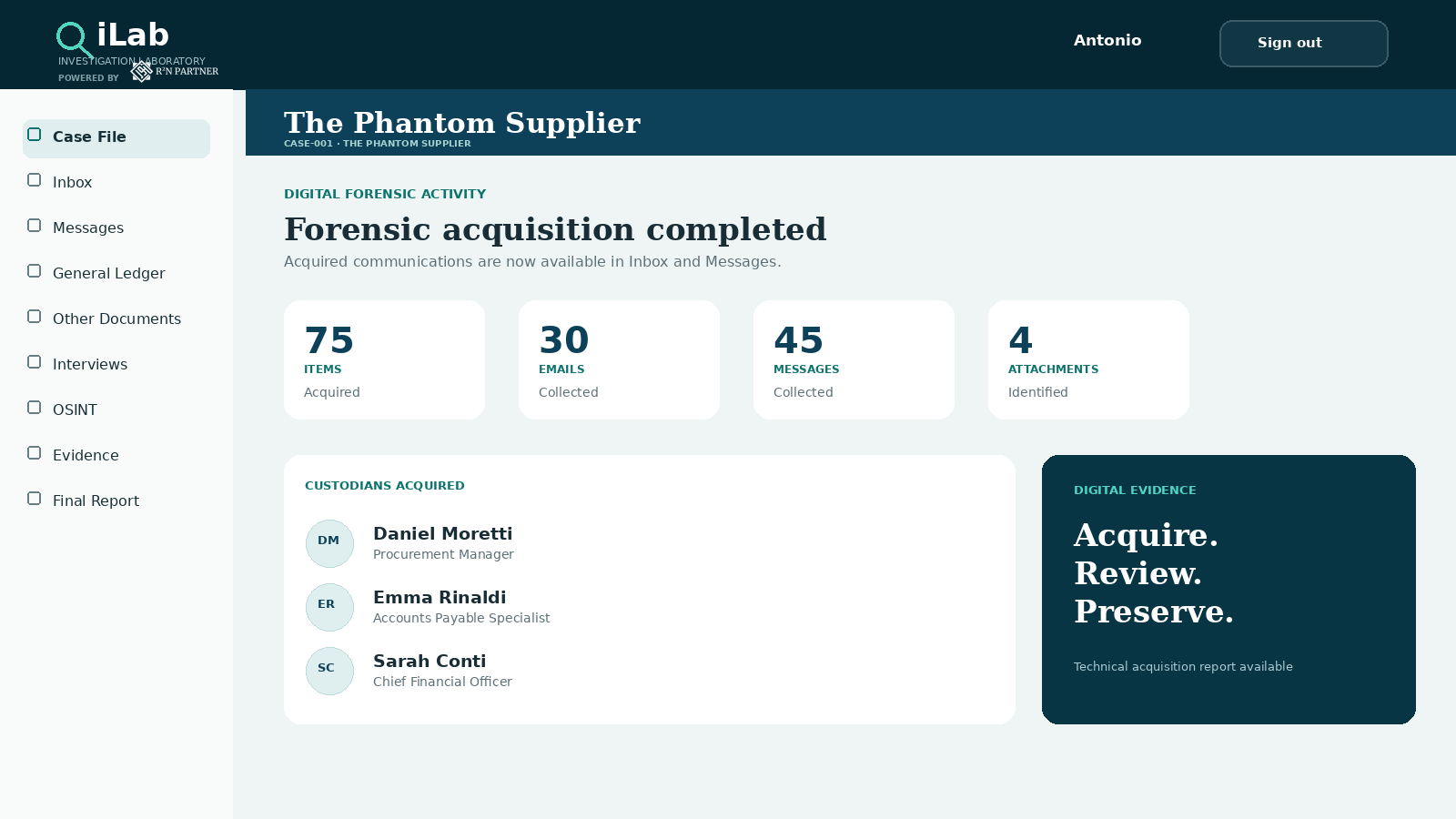
Participants identify appropriate custodians, initiate authorised forensic activity and work with separate acquisition reports generated from each action.
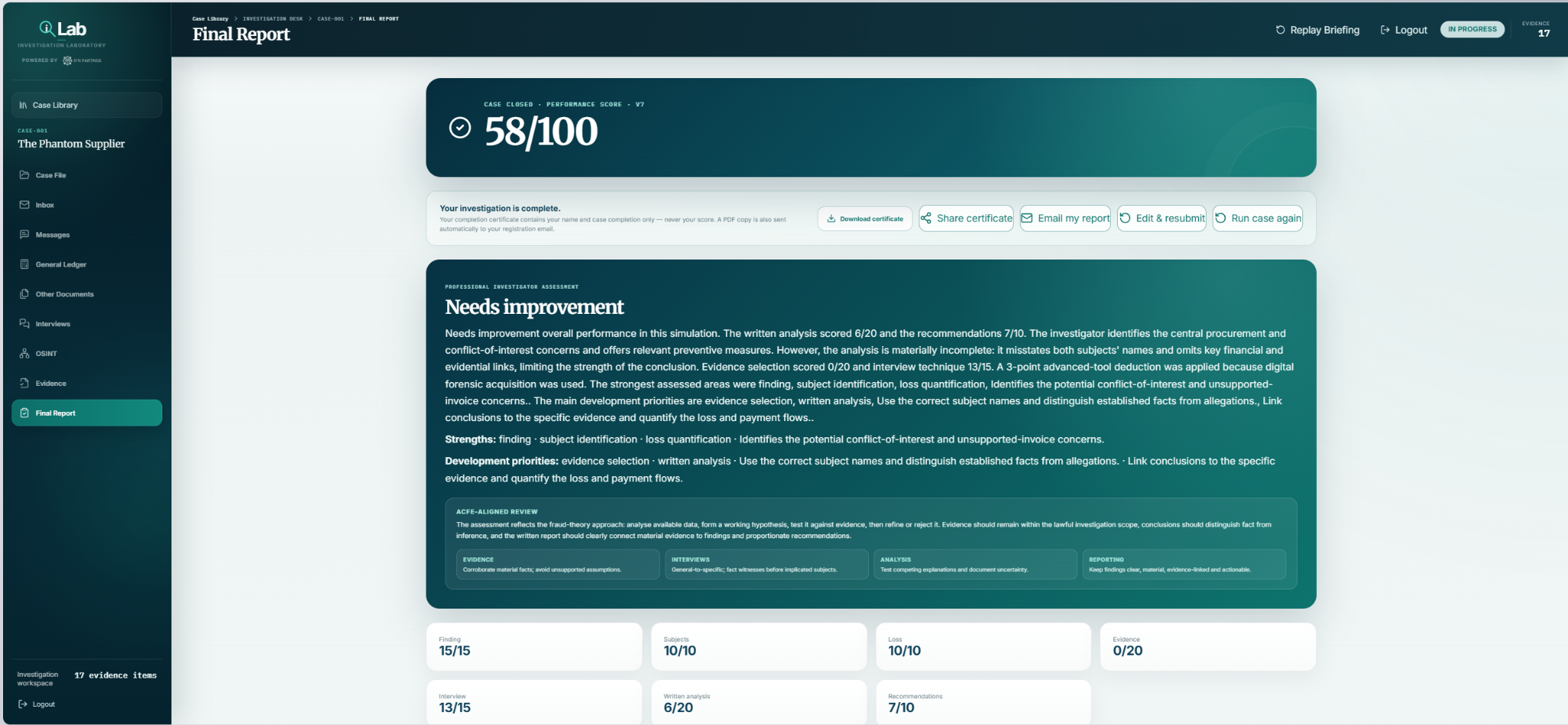
i-Lab is designed to assess investigative quality, not simply whether the participant guessed the responsible person. Findings, evidence, interviews, financial exposure, recommendations and serious investigative violations can all affect the result.
Enter a scenario with a defined mandate, available information and investigation objectives.
Use the available tools to review documents, transactions, communications, people and external information.
Decide what matters, preserve key evidence and test competing hypotheses as the case develops.
Submit the final investigation report and receive a structured assessment of outcome and investigative method.
Bring practical investigation work into fraud, forensic accounting, compliance and financial crime programmes.
Use realistic cases for investigator, audit, compliance and first-line training without exposing real company data.
Move workshops beyond slides by combining facilitation with individual investigation decisions and measurable outcomes.
Forensic accountants, fraud investigators, internal auditors, compliance and financial crime professionals, students and other learners who need to practise investigative judgement.
No. Cases can be selected according to level and learning objective. The platform can support introductory training as well as more advanced professional exercises.
Yes. R2N Partner can develop bespoke investigation simulations around specific fraud typologies, sectors, policies or learning objectives.
Assessment considers both the outcome and the quality of the investigation: evidence, interviews, reasoning, financial exposure, reporting and recommendations can all contribute to the final score.
Access i-Lab directly or contact R2N Partner to discuss institutional access, workshops or bespoke scenarios.